Yangsung Medicine: “finding and raising one’s true self”. Notes from Dr. Seung Choi lectures. Virginia University of Integrative Medicine, Summer 2024.
Use the questions below in your Journal to weight loss. Scroll down to find them.
3 aspects to treat Obesity: behavioral, cognitive, and spiritual.
Oriental Medicine (OM) psychiatry: Mind-Body, Life Nurturing Medicine, Natural Medicine, and the Tools of psychiatry.
- Mind-body: unity of mind and body, OM does not separate these, we consider physical and mental with equal importance. Mind and body are one.
4 Schools of the Jin era: 1115-1368 A.D. Jin and Yuan dynasties (Wars and epidemics). Theories and techniques promoted medical development and progress, significant influence on medical innovation.
- Liu Wansu (1120-1200?) he suggested excessive emotions lead to heat. He was from a era of epidemics, six seasonal influences change to fire, cooling herbs for fever and inflammation. School of cold and cool. Control Fire.
- Zhang Zihe (1156-1228) he believed that all emotional problems are linked to the heart and treatment is aimed at calming the heart fire. School of purging. If pathogen is gone, the vital energy recovers. Perspiration, regurgitation, and purgation. Rumen Shiqin, writings.
- Li Dongyuan (1180- 1251) he stated that mental stimulation depletes vital energy (yuan qi), leading to yin fire, which is a disease cause. Turbulent times people suffer from hunger, cold and mental distress causing internal injury. Harmonizing the earth (Stomach and spleen) to be healthy. School of invigorate the Earth. Bu Zhong yi qi tang. Pi Wei Lun.
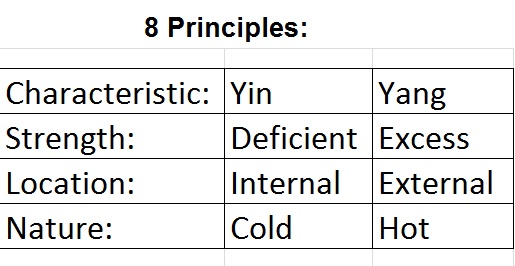
- Zhu Danxi (1281-1358) noted excessive mental agitation and mental fatigue impede the circulation of qi, resulting in the formation of phlegm. From a stable era, nourish the minister fire, Kidney yin. Excess yang causing deficient yin. Moderation in eating and sex. Water. Danxi Xinfu, Jufang Fahui.
2. Life Nurturing Medicine: emphasis is on Self-Care: Self care in regulating the heart-mind, Diet, adjusting daily routines, tonify with qigong, meditation, breathing, lifestyle for mental state.
- Cultivating mindfulness in daily life. “Harmonize the mind with the Tao”, and “A Healthy Mind keeps disease at Bay”.
- Treating the diseases with Tao. Wise doctors of ancient times treated the minds of people to avoid diseases.

3. Natural medicine. Correspondence between heaven and humans. Harmony with nature: day, seasons, year, cycles, environment to improve conditions.
- Living in accordance with the 4 seasons.

4: Tools of OM Psychiatry: tools are based on principles of Mind and body, Nurturing Life, and natural medicine.
- Emotional issues are addressed alongside problems of internal organs.
- The diagnostic approach of pattern differentiation is equally applied to mental and emotional states.
- Tonification methods that enhance the Qi are used to induce natural healing.
- Self-cultivation and lifestyle is under the belief that finding the path to Tao leads to healing, with patient playing a role in their recovery.
Examples herbal formulas and acupoints: Xiao yao San- soothes the Liver and relieves Qi stagnation helping patient calm the mind.
Gui Pi tang: return to spleen formula treats forgetfulness and anxiety by tonify the heart and spleen. Calms the shen.
Liver 3 “Tai Chong” – calms spasms and Liver yang.
ST36 Zusanli- calms the shen, nourishes blood.
HT7 Shenmen- regulates heart, calms shen, clears heat.
Anmian- calms the shen and helps sleep.
- Psychotherapy in Traditional medicine:
- Mind: Xing is mind, and Qing is emotions. Xing is fundamental essence of mind, heart-mind, compassion, our sense of right and wrong. Qing is the expression of the minds energy.
- Eastern psychotherapy: rooted in Confucianism: Humanistic stance, humans as active agents of their actions, social relations, not isolated from society.
- Therapeutic methods: enlightenment and self-cultivation, therapist facilitates self-insight without intervening. (Carl Roger’s Person-centered therapy) Eastern approaches of patient-centered and insight-oriented approaches are similar to western counseling, humanistic therapy, solution-focused therapy, and Jungian analytical psychology.
- Psychotherapy in Chinese medicine: shamans, herbs, acupuncture, and cases mentioned, but no described specific therapeutic methods.
- Practitioners might live with patient for a few days to observer eating and behavior, aimed at changing cognition and emotions.
- Using the 5 elements: joy counteracts worry and sadness, Pensiveness counteracts fear, sadness counteracts anger, fear counteracts joy, anger counteracts pensiveness.
- Zhang Jing yue: school of warm tonification. Tonify kidneys and mingmen. Tonifying, heating, cooling, harmonizing, stabilizing. Jing Yue Quan Shu (1624). Lei jing (a study of Neijing).
- Yangsung Therapy: Preserve the heart and nurture the nature. Holistic treatment using a multi-dimensional approach involving behavior, mind, and spirit.
- Behavioral: adjusting diet and physical activity.
- Mental: cognitive approach to emotions and thoughts that trigger problematic behaviors.
- Spiritual: realizing the unconscious self that underlies the conscious thoughts. Deep self-awareness to make corrections in thoughts and emotions.
- Nurturing the heart-mind: reflect on personal desires, self-examination, meditation, self-control and reflection.
- Six Stages: therapy is structured in 6 stages and not strictly sequential.1.
- Self-awareness: understand innate qualities like benevolence, righteousness, and wisdom are natural and self-derived.
- MingTao: realize the self as a moral subject. Setting weight control based on a clear understanding what needs to be addressed, realistic goals, personally meaningful.
- Reflecting on desires: assess personal values and happiness. Ensuring weight goals and behavior align with overall well-being. Motivations behind weight loss.
- Self-Examination: using meditation to explore the true self. Removing obstacles to potential and fostering authentic self-concept. Breathing and visualization may be used.
- Jiyi: Practicing righteousness naturally, relying on inherent self-control and recognize personal strength. Weight loss with positive reinforcement.
- Self-reflection: Reviewing progress and planning for the future. Maintaining sustainable lifestyle changes, integrating new habits into daily life, celebrating personal achievement.
- Questions for patients include:
- When were you the slimmest, were you happier then?
- If not, why are you trying to lose weight?
- How did you live when you were slimmer, and what was different?
- Will achieving weight make you more happier?
- What lifestyle changes will be needed to maintain the weight?
- BMI: Body Mass index is a person’s weight in kilograms divided by the square of height in meters. A high BMI can be an indicator of high body fat.
- Disinhibition: inability to withhold an inappropriate or unwanted behavior. Dietary disinhibition is eating in response to triggers and emotions leading to weight gain. Restraint eating is the conscious restriction of food intake to control body weight. Hunger is the urge to eat. Hunger can be intensified by cycles of restraint and disinhibition. These change with treatment as restraint eating should decrease and replaced with intuitive eating. Disinhibition should decrease and emotions regulate and improve, Hunger should stabilize becoming more aligned with physiological needs.
- Koan/Hua Tou/Hwadoo: Chan or Rinzai Zen approach meaning ‘word head’ or ‘point beyond with speech exhausts itself’. A short phrase to concentrate the mind. For example: “where does the mind come and go?”. It is a Buddhist practice to find profound spiritual awakening leading to enlightenment. There are paradoxical questions designed to make the mind ponder deeply and help mind go beyond conventional thinking and experience reality. Patients can gain insight into their own thoughts and emotions and explore and address underlying psychological factors that contribute to their eating habits.
Mind: observing the patients core beliefs about themselves, reasons for weight loss, examining their past with family and relationships.
These are looking at patients life early experiences- Core beliefs- dysfunctional assumptions- critical incidents- negative automatic thinking- Behavior – Mood.
Using buddhist “True self” methods and teach patient not to try to be something else. For example perfect, which causes more stress and possible failure.
| Yangsong Therapy for Obesity |
| -Motivation is most important. |
| -People with Chronic problems need additional help |
| -Self-image issues needs a compassionate approach. |
| -Cycle of weight is due to problems with heart-mind. |
| -Yangsung means to nourish the persons innate natural mind. |
| -Menicus- “If you fully explore your mind, you will know nature. If you know your nature, you know |
| heaven. To preserve your mind and nourish your nature is to serve heaven.” |
| -Rooted in Buddhism, Taoism and Confucianism: Mind- Behavior- Inner Self holistic treatment. |
| -Emotional eating cause: distorted self-image/trauma inferiority complex- feeling schange- depressed, low self-esteem, daily habits change: binge eating. |
| -Emotional eating treatment: develop true self awareness, working with mindfulness meditation, build healthy daily habits. |
| -Yangsung is not about being slim and happy, it is about searching and finding the beautiful parts in yourself. Not become something you are not, which can lead to failure. |
| -Teenager girls that think they are fat and torture self, need to realize this distorted self-image and find the treasure within themselves. |
| Questionaire: Am I a fat person? |
| Do you see yourself as a fat person? |
| Do you think it is difficult to change your thoughts? |
| Have you been fat from birth? |
| I have been fat, slim, or normal most my life? Which of the 3? |
| When did I become fat, slim, or normal? |
| Willpower questions: perceive strengths to carry out plan |
| What am I good at? |
| What are my strong points? |
| What is a moment you accomplished something you think you could not do? |
| Using images to have a deeper look at yourself: |
| 1. post a recent picture of yourself |
| 2. post a favorite picture of yourself |
| 3. Talk about those two pictures about yourself. |
| 4. Look in the mirror. What do you feel? Circle: beautiful, elegant, pure, foolish, out of style, pretty, dull, healthy, spirited, feminine, disgusting, simple, good, old |
| lovely, plain, ordinary, skinny, chubby, fat, too much, sexy, fresh, cool, stuffy, weak, passionate, fragile, confident, lacking confident. Anything else? |
| 5. What do you think is the real you? |
| 6. Which one do you actually want to be? |
| 7. Do you find yourself full of weakness? |
| Diet success: |
| -distorted beliefs tend to torture ourselves. We need to find these false beliefs and deal with them. |
| -Face the false beliefs, realize your true beautiful inner self, and then you will naturally act and feel like a beautiful person. |
| -Discover your good nature and nurture it, awaken the Tao and find your enlightened self. |
| Write down the follow: |
| Write 10 things you think others see you: |
| Write 10 things you see yourself |
| Is there a gap between the two? |
| What traits best describe the real you? |
| Which ones do you want to be? |
| Self-Esteem Test. Yes or No? |
| I am satisfied with myself. |
| I sometimes wish I’m someone else |
| It feels like there is no one that really understands me. |
| I believe I have good traits. |
| I have nothing to be proud of. |
| I wish I could think more positively about myself. |
| Write down 10 strong points about yourself |
| Write 10 weak points about yourself. |
| Questions on Happiness |
| When did you feel the most happiness? |
| What was it you really wanted? |
| We all have different criteria for happiness, what is yours? |
| Why do you really need to lose weight? |
| Write down some moments of happiness in your life. |
| Weight number questions |
| When do you think you had the most proper weight? |
| How much did you weight at that time? |
| Were you much happier than now? |
| How much weight loss would make you happier? |
| How much you are limiting your food is a sign how much you are fighting with food. The less you restrain yourself, the more chance of success. Avoid yo-yo effect. |
| Restrain, disinhibition, and hunger questions: yes or no? |
| When I smell delicious food I find it difficult to keep from eating, even if I just finished a meal. |
| I deliberately take small helpings as a means of controlling my weight. |
| Sometimes when I start eating, I cannot seem to stop. |
| I get so hungry my stomach feels like a bottomless pit. |
| I consciously hold food back at meals in order not to gain weight. |
| I do not eat some foods because they make me fat. |
| I am always hungry enough to eat at any time. |
| Overeating and Binge eating |
| -Our body is designed to give you a feeling of fullness to signify when to stop, binge and overeating is different. |
| -Binge is when you feel you cannot stop eating even when you are full. |
| -Other disorders cause you to throw up any large amounts of food you have eaten. |
| Binge eating questions: |
| It has been over 3 months since you been binge eating. |
| Once you start binge eating, you eat 2-3 times more than normal in 1-2 hours. |
| You experience binge eating 1-2 times a week |
| You can not control yourself at all when binge eating. |
| You use products like vomiting agents, laxatives, diuretics or compulsive exercise for a long time. |
| You eat along because of embarrassment |
| You feel guilty and very happy at the same time while binging. |
| Diagnosis of Obesity |
| BMI- body mass index- weight in KG divided by height in meters. |
| -BIA- bioelectrical Impedance analysis:: estimated body compartments with mechanism of resistance and reactance. Electric signal. Meets resistance when it hits fat tisssue. |
| -Hydro densitometry: gold standard for PBF (percent body fat) weight in water. |
| -Air displacement plethysmography- estimates body weight with air rather than water. More expensive. (Bodpod) |
| -WHR- waist-to-hip ratio. Good indicator of cardiovascular risk, body fat distribution, hypertension in type 2 diabetes. |
| -Skinfold caliper |
| -Dexa- Dual energy X-ray absorptiometry. |
| CT scan. |
| Top 3: Dexa, Bodpad, WHR (U.S. navy formula) |
| Establishing Plan: |
| -Food channels distract us, Media tells us to lose weight, new diets and exercises tempt us, or we see hot bodies that make us feel guilty. |
| -Most want to lose weight for health but after questions, it was not the main reason. Have clear goals when starting a diet. |
| -Many really want it for appearance, but really most important is how you perceive yourself. |
| -Diet should include: try a make-up lesson, buy new clothes, learn how to be more confident, practice correct posture, smile more and think more positively. |
| -Write down the fruits you want to get out of diet. Things you desire: fit into a smaller size dress, feel good about self, be free of back pain…. |
| -Weight goal: be real and start calculating: how much do you need to lose to achieve your goal. —-Example: be under 132 lb. , lose 10% of my weight, gain 7 lb. , etc. |
| -Behavioral Goal: List behavior goals you need to accomplish this. Example: eat dinner before 7pm, cut carbohydrates in half, walk 30 minutes a day, etc. |
| -Write down you present weight, dream weight, weight you want for yourself, tolerable weight. |
| -Rate each one 0-5 with 0 no importance and 5 most important: Looks, Size, health, Activities, career, social life, self-esteem, personal relationships |
| -how much weight did you lose when you had a successful diet? |
| -what in your life would be different when you reach your weight goal? |
| Identify obstacles and what you need to overcome. |
| Write down your eating habits |
| Write down your stressors |
| Write down your activities |
| Write down your working habits |
| Write down anything else |
| What are you willing to sacrifice? |
| Journal and Record your food intake: |time you ate| Where | What did you eat | With who | feelings after eating |
| Do you eat regularly? |
| What circumstances do you find yourself that may cause overeating? |
| Do you eat regularly? |
| Do you find circumstances where you may over eat? |
| do you think you are eating more than you think? |
| Do you think you are eating more often than you think? |
| Do you think your consuming too much calories? |
| do you think your meals are well balanced? |
| Food high in nutrition and low in calories: tomatoes, eggs, tofu, vegetables, white fish, lean meats |
| Foods low in nutrition and high in calories: candy, cookies, ice cream, soda, alcohol |
| workout questionnaire: |
| Do you walk short distances? |
| Do you stand at work? |
| I move throughout the day and exert my strength |
| My routine is irregular. Activity depends on schedule, sometimes I move a lot, sometimes, just still. |
| I sit at least 8 hours a day. |
| I do not move much, I often lie down. |
| Exercise needs to be: Fun, Accessible, and Consistent. |
| It needs to be fun and if is is not fun and feels like work go to plan B. Increase daily activity, walk around more, do house work, get creative. |
| Have an exercise buddy, try a local gym, jog in your neighborhood, try youtube workouts. Be consistent. |
| Metanalysis of 493 studies on a 15 week intervention: Exercise alone 6.4 lb weight loss. Diet alone: 23.5 lb. weight loss. Diet and exercise: 24.2 lb. weight loss. |
| Treatment Strategy |
| Tonfiy qi and blood |
| Clear heat |
| Drain damp and phlegm |
| Regulate Qi and Blood |
| Calm the shen (mind) |
| herbal formulas: |
| Xiao yao San: cooling: chai hu and Bo he, tonify Qi- Bai Zhu and Gan Cao, tonify blood: bai shao and Dang Gui, Drain Damp: fu ling, clear heat: Mu dan pi and Zhi zi. |
| Su Wu Tang: Nourish blood Shu di huang, Bai shao, Dang gui, Invigorate blood: chuan xiong. |
| Choi Seung Diet : Huang Qi, Dang gui, Bai shao, Huang jing, wu jia pi, chen pi, chuan xiong, Fu Ling. |
| Fang Feng tong shen san- release exterior, expel wind, clear interior heat, promote defecation: |
| herbs: jing jie, fang feng, bo he, ma huang, (releaze exterior) huang qin, lian qiao, zhi zi, shi gao (clear heat) da huang mang xiao (drain downward). |
| Herbs: Tonify blood with dan gui and bai shao, tonify qi with Bai zhu and Gan cao, regulate blood with chuan xiaong, and transform phlegm with Jie Geng. |
| Acupuncture: |
| Local points with E-stim on Abdomen and thigh, e-stim with 2-3 hz, 20-25 hz, or 2-80 hz alternating. Buttocks and posterior thigh. |
| Distal Points: Sp6, Ren12, St36, Sp3, Liv3 |
| Auricular acupuncture: shen men, stomach, spleen, lung, hunger, endocrine. |
| Moxibustion on Lower abdominals. |
| Going on a Diet |
| -Moderate appetite, make it a habit, moderate- eat when hungry, stop when you reached right amount. Schedule meals same time everyday. |
| -Being perfect is the enemy of the diet. Nobody is perfect and it creates stress to be perfect. |
| -Keep a journal, record your feeling and sensations. |
| -Don’t beat yourself up if you find you overeat in a social setting. Do not skip meals or go excessive on the tread mill. Do not starve self. |
| -Meditation do not try to reach nothingness or forget yourself when starting meditation. Do not fight against thoughts, let them come and pass. Straighten the back. |
| ponder and contemplate, choose a koan to think about. Look at breathing, feel the air go into nostrils, in and out of lungs. |
| -Eat anything you want but in small amounts. Excess restriction can backfire the diet. Reward self rarely with a particular food you like in moderation. |
| -How much weight did you lose? |
| -are you close or far from your goal? |
| -Weight-loss plateau happens- usually around weeks 3-6_ do not stop and keep going. Change up routine and do not weigh on scale too often. |
| Questions: approaching the finish line |
| scale of 1 to 10. |
| How much do you think the issues made you to decide the diet is solved? |
| What are the problems remaining? How can they be solved? |
| How close are you to weight goal? |
| How much are you satisfied with the result? |
| How close are you to dream weight? |
| How do you feel about new lifestyle? |
| Do you miss anything about the old lifestyle? |
| Yo-Yo/relapse |
| often after 6 months of a diet weight can return. |
| successful diets are to prevent the yo yo effect. |
| 5 years is the minimum for a successful diet. |
| Make the new lifestyle a habit. |
| -lose body fat not lean muscle, increase lean muscle mass, it will increase overall basal metabolic rate and help burn more calories. |
| -Statistically, those who lose 20 lb. and keep their weight off are better than those who lost 10 lb. |
| Have you changed your body image from being fat? |
| When did you change your body image? |
 Yongnian Tai Chi